How to translate your restaurant menu for tourists (without losing the flavour)
A menu in just one language leaves visitors guessing — and ordering less. Learn which languages to offer, how to translate local dish names without ruining them, and the most common mistakes.
Tourists sit down at restaurants every day without understanding a word of the menu. When that happens, they do one of two things: order the safest dish — or point their phone camera at the menu and trust a machine translation that turns a local classic into something unrecognisable.
A well-translated menu helps guests choose with confidence, saves your team time and shows care. This guide explains how to do it well.
Which languages to offer
Start by working out who your guests are. Ask your front-of-house team, look at bookings and read your online reviews.
English is almost always essential: it is the shared language of international visitors.
Spanish, French, German and Italian pay off in tourist areas and in cities with many European visitors.
Your country's language stays the main one — the menu is for your regulars too.
Menuyo shows the menu in up to six languages — Portuguese, English, Spanish, French, German and Italian. Three carefully translated languages beat six half-finished ones.
How to translate traditional dish names
Traditional dishes have names that should not be translated — and that is a good thing. The rule that works best is keep the original name and explain it in the description:
Polvo à lagareiro — "Octopus roasted with olive oil, garlic and smashed potatoes."
Bacalhau à Brás — "Shredded salt cod with egg, onion and straw potatoes."
Pastel de nata — "Custard tart in crisp puff pastry."
Guests learn the name, can order it without fear of getting it wrong and know what they are about to eat. Avoid literal translations: "codfish to Brás" helps nobody.
Short, concrete descriptions
A good description answers three questions: what it is, how it is made and how much there is. "Charcoal-grilled, with seasonal vegetables" says more than three adjectives. If a dish is for two, say so — it is one of the most common questions.
Prices, portions and labels
Prices need no translation, but their labels do: glass and bottle, half and full portion. In Menuyo, every price can have a label, and that label is translated too.
Allergens and dietary tags are another critical point — and here there is no work for you: in Menuyo, the names of the 14 allergens and of tags such as vegetarian or gluten-free already appear in the language the guest chooses. More on that in the 14 mandatory allergens.
The most common mistakes
Machine translation without review. Tools help you start, but dish names and regional ingredients need human eyes.
Mixing languages. Half the menu in English and half in the local language confuses more than it helps.
Out-of-date translations. Changed the side dish in your main language and forgot the English? The foreign guest receives a different dish from the one they read about.
One PDF per language. Every time a price changes, there are four files to update — and one always gets forgotten.
How it works in Menuyo
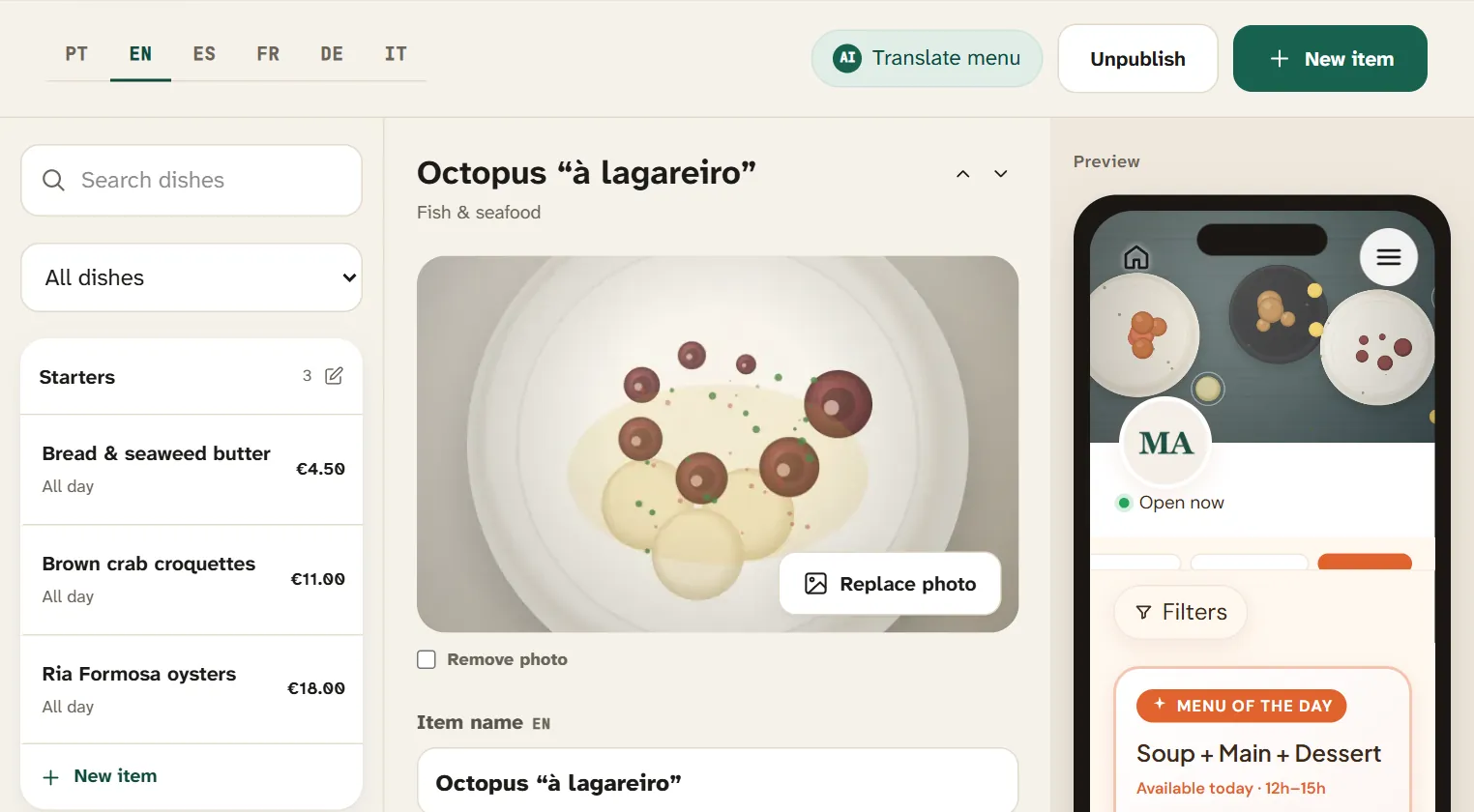
Each dish has language tabs. Write in your main language first, then fill in the others. The dots next to each language show at a glance what is translated and what is missing.
Language tabs show what still needs translating for each dish.
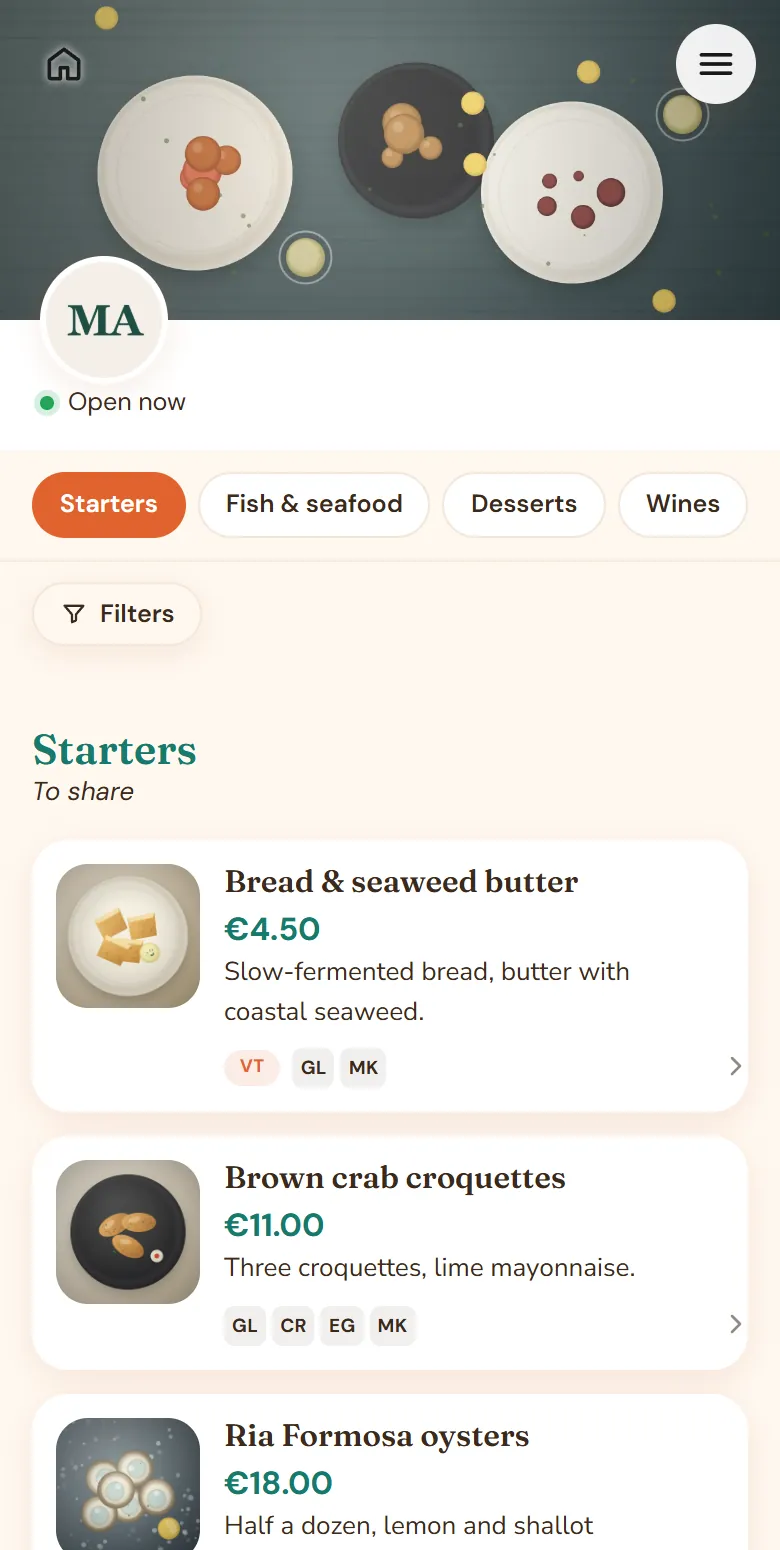
Guests choose their language on the menu itself, with one tap, and everything changes: names, descriptions, categories, labelled prices and allergens. It is always the same QR code.
The same menu in English. Guests switch language with one tap.
On the Pro plan, AI prepares draft translations for the whole menu and draft descriptions for each dish. They are drafts: they stay flagged for review until you confirm them, and you can edit them freely. Hours of work become minutes, without giving up control.
Quick checklist
Choose languages based on the guests you actually get.
Keep traditional names and explain them in the description.
Write short descriptions: main ingredient, preparation, portion.
Review everything that was machine-translated.
When a dish changes, update every language the same day.